

THE FLOWERS.AE JOURNAL
Chinese New Year Flowers: Meanings, Lucky Blooms & Flowers for Good Luck
Stories, inspiration and thoughtful gifting ideas.
12 FEB 2026 · 5 MIN READ · CHINESE NEW YEAR FLOWERS
Chinese New Year, also called Lunar New Year, is a celebration steeped in ritual, symbolism, and the art of renewal. Flowers play a key role in this tradition, with each bloom carrying meaning—from prosperity and longevity to resilience and grace.

In Chinese tradition, the practice of selecting flowers for the New Year is deliberate. Certain varieties are believed to attract good fortune, while others honor family and heritage. Understanding these botanical traditions allows you to curate arrangements that resonate beyond aesthetics, creating spaces that welcome luck and positive energy into the year ahead.
Floral tradition during Lunar New Year extends beyond ornamentation. For centuries, families have selected specific blooms to invite prosperity, happiness, and auspicious energy into their homes. This practice reflects a deeper philosophy—that nature, when thoughtfully arranged, can influence the quality of our lived experience.
Lucky flowers serve multiple purposes during the festival. They honor ancestors, welcome guests, and set intentions for the months to come. The act of gifting flowers carries equal weight, symbolizing respect, affection, and shared hopes for abundance. Whether displayed in the home or presented to loved ones, these blooms become part of a larger narrative about renewal and fortune.

Each variety carries distinct symbolism, rooted in centuries of cultural tradition:
Roses
In Chinese New Year celebrations, roses—particularly in red and gold—embody deep sentiment and prosperity.
Red roses represent passionate joy and good fortune, while
gold roses symbolize wealth, abundance, and success in the year ahead. Their enduring beauty makes them ideal for both grand gestures and intimate arrangements.
Orchids
Elegant and refined, orchids embody fertility, scholarly achievement, and noble character. Their delicate structure belies remarkable resilience, making them symbols of both grace and inner strength.
Chrysanthemums
These blooms signify longevity and vitality. In Lunar New Year contexts, chrysanthemums—particularly in golden and red hues—are chosen to promote health and sustained energy throughout the year.
Peonies
Regarded as the king of flowers in Chinese culture, peonies represent wealth, honor, and romantic prosperity. Their lush, layered petals symbolize abundance in all forms—financial, emotional, and familial.
Narcissus
Often called the "water fairy flower," narcissus blooms symbolize good fortune and prosperity. Their arrival signals spring's approach, making them particularly auspicious for New Year celebrations.
These flowers for good luck form the foundation of traditional Lunar New Year arrangements, each selected for its unique capacity to channel specific forms of positive energy.

This year's celebrations call for arrangements that balance tradition with contemporary sensibility. Consider these approaches:
Red and Gold Dominance
Red remains the quintessential color of Chinese New Year, representing joy, vitality, and protection against negative energy. Gold amplifies wishes for wealth and material success. Arrangements emphasizing these hues create immediate visual impact while channeling traditional prosperity symbolism.
Orchid Elegance
For those seeking refined simplicity, orchids offer lasting beauty that extends well beyond the festival period. Their architectural form suits contemporary interiors, while their cultural significance—representing integrity, scholarship, and noble character—resonates across generations.
Grand Gestures
Substantial arrangements signal ambitious intentions for the year ahead. Large-scale compositions demonstrate commitment to prosperity and abundance, making them particularly appropriate for corporate environments, luxury residences, and significant family celebrations.
Beyond traditional arrangements, contemporary floral artistry has evolved to create sculptural statements that transform flowers into architectural form. The Lucky Horse represents the pinnacle of this evolution—a bespoke floral creation that honors Chinese New Year symbolism through exceptional craftsmanship.
This piece transcends conventional arrangement, functioning as both botanical art and cultural statement. Every element serves symbolic purpose: the horse itself represents strength, success, and forward momentum in Chinese zodiac tradition, while the carefully selected blooms reinforce themes of prosperity and renewal.
Such sculptural works suit environments where Chinese New Year celebrations demand distinction—corporate lobbies, luxury hotels, prestigious events, and private residences designed for grand entertaining. They signal that tradition is honored not through replication, but through elevated interpretation.

Color Considerations
Red symbolizes joy and good fortune, while gold represents wealth and prosperity. Yellow conveys royalty and power. Purple and pink tones add sophistication while maintaining auspicious energy. White flowers, traditionally associated with mourning, are best avoided during New Year celebrations.
Strategic Placement
Position arrangements in areas where they'll be noticed upon entering—foyers, dining rooms, and main gathering spaces. Flowers placed in the wealth corner (southeast) of a room are believed to amplify financial prosperity.
Pairing and Balance
Combine blooms with varying textures and heights to create visual interest. Branches with buds signal potential and growth, while fully opened flowers represent current abundance. Including both creates temporal balance.
Vessel Selection
Our
hatbox presentations offer immediate elegance, while
vase arrangements provide flexibility for those who prefer to integrate blooms into existing décor. Potted orchids deliver lasting beauty that extends well beyond the festival period.

Explore our Chinese New Year collection to discover arrangements designed with these principles in mind, crafted for those who appreciate both botanical beauty and cultural resonance.
Chinese New Year flowers represent more than seasonal decoration—they're conscious choices that shape the energy of your space and the year ahead. Whether you select peonies for prosperity, orchids for refinement, or chrysanthemums for vitality, each bloom becomes part of your intention for 2026.
The tradition of welcoming the Lunar New Year with lucky flowers endures because it connects us to something larger than ourselves—to cycles of renewal, to cultural heritage, and to the belief that beauty and meaning can coexist in a single stem.
View our Chinese New Year Flowers to find arrangements that honor this tradition with the quality and refinement your celebrations deserve.
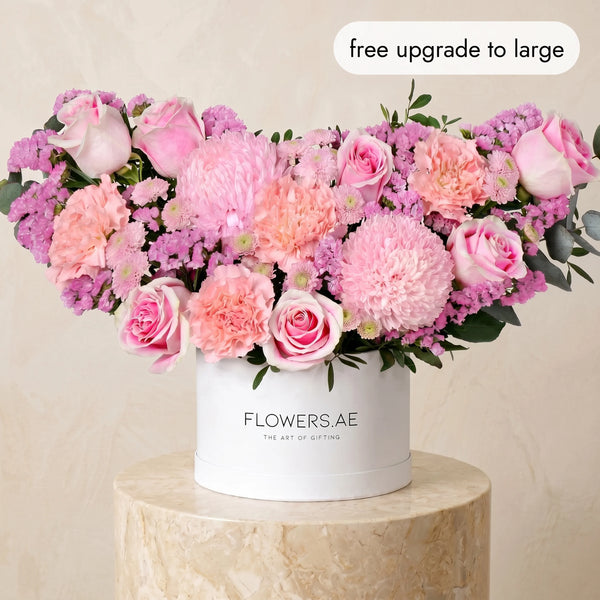
Pink roses, chrysanthemums, carnations, and statice arranged ...
AED 375.00
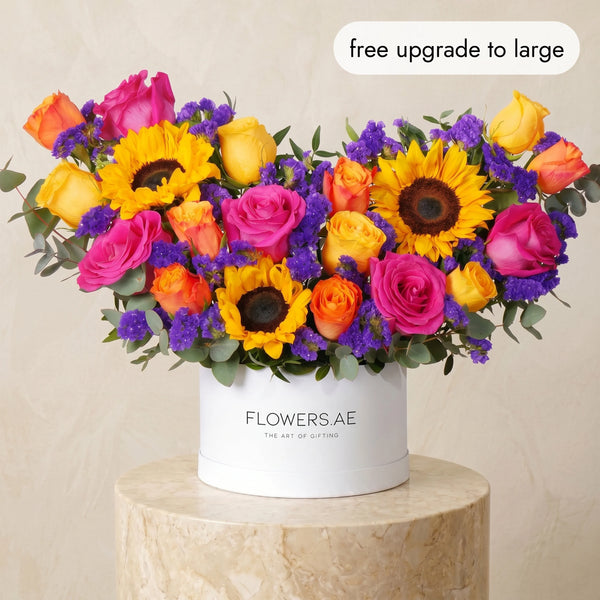
A joyful burst of sunflowers, yellow roses, orange roses, fuc...
AED 375.00
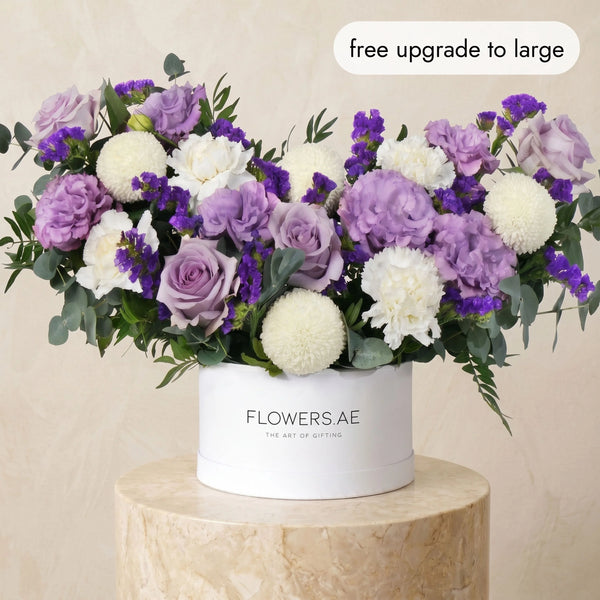
A luxurious harmony of frilled purple lisianthus, roses, whit...
AED 375.00
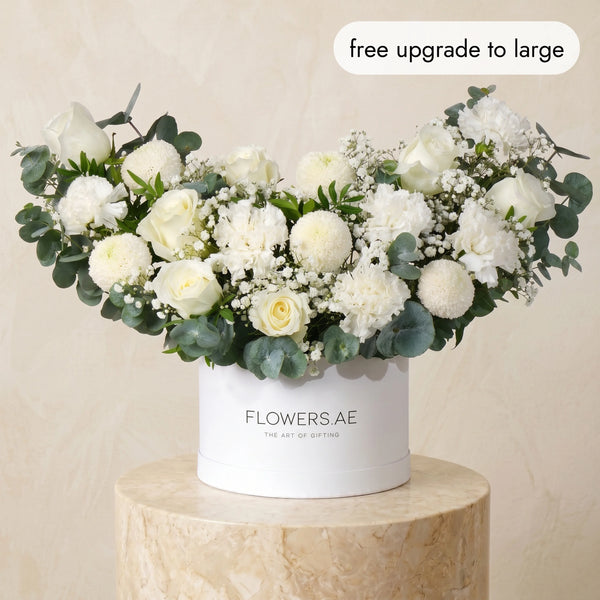
An enchanting white arrangement presented in a stylish hatbox...
AED 375.00


